
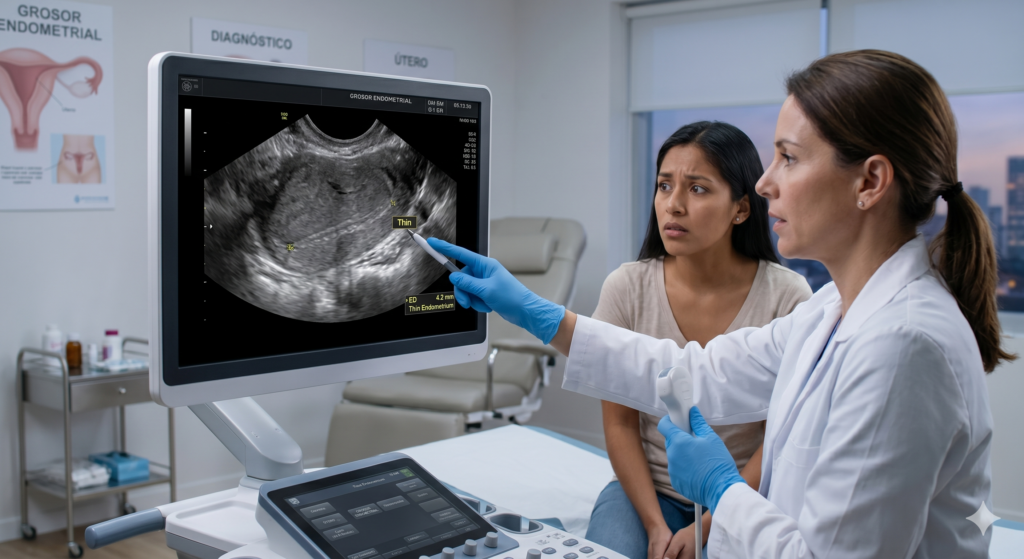
A thin endometrium — typically defined as a lining measuring less than 6mm on ultrasound — is one of the more frustrating challenges a patient and clinician can encounter during an IVF cycle. It can meaningfully reduce clinical pregnancy rates, generating real anxiety and uncertainty. But the evidence on how to address it is more limited than many patients realize, and it is important to distinguish between what is well-supported and what remains experimental.
When is the endometrium considered thin?
There is no universally agreed cutoff, but most clinicians and most studies define a thin endometrium as a lining measuring less than 6–7mm on the day of embryo transfer preparation. It is important to note upfront that the evidence does not definitively support canceling a transfer based on thickness alone. Some published studies have reported comparable success rates even with linings below the conventional threshold — which means that a thin measurement should prompt a systematic response, not automatic cancellation.
The causes of thin endometrium are varied: prior uterine procedures (such as dilation and curettage), intrauterine adhesions, infection, inadequate estrogen stimulation, or reduced blood flow to the uterus. Understanding the underlying cause, where possible, guides the management strategy.
First-line approaches
The first step in managing a thin endometrium is almost always to extend estrogen administration. Most patients who respond to estrogen will achieve adequate thickness with 7–10 additional days of treatment. This is simple, low-risk, and effective for a meaningful proportion of patients. When extending the duration does not produce the desired result, the next steps include:
- Changing the delivery method — switching between patches, vaginal gel, injectable, or oral estrogen can improve absorption and endometrial response in some patients
- Increasing the dose of estrogen to maximize the hormonal stimulus
- Inducing a withdrawal bleed and restarting the preparation cycle from the beginning
These approaches are evidence-based, widely used, and should be exhausted before moving to experimental interventions.
Experimental add-ons
When standard methods have failed to achieve adequate thickness, three additional options are sometimes offered. It is essential that patients understand their current evidence status:
- Sildenafil (Viagra): Used vaginally, sildenafil is thought to increase uterine blood flow. It is probably the most accessible experimental option due to its low cost and ease of administration. However, evidence of a meaningful impact on live birth rates remains limited, and it should be approached as a reasonable option to try rather than a proven treatment.
- PRP — Platelet-Rich Plasma: Intrauterine infusion of PRP, derived from the patient’s own blood, has shown some promise in thickening the endometrial lining in case series and small studies. However, as current systematic reviews conclude, the quality of evidence is low to very low, with significant risks of bias in published studies. It is not a validated treatment.
- G-CSF (Granulocyte Colony-Stimulating Factor): The least-studied of the three options, G-CSF is considered experimental, with insufficient safety and efficacy data to support routine use. It should be offered only in highly selected cases and with full transparency about its experimental status.
These are legitimate options for discussion between patient and physician — but patients deserve to understand that none of them are established treatments with robust clinical trial support. Offering them should be framed honestly, not as proven solutions.
When standard approaches don’t work
If endometrial thickness cannot be improved to an adequate level despite exhausting all available approaches, the remaining option is to proceed with embryo transfer despite the thin endometrium, accepting a lower probability of success and making that decision together with the patient.
“A thin endometrium is a real challenge — but it’s often more manageable than patients fear. The key is a systematic, evidence-based approach rather than jumping to unproven add-ons.”
