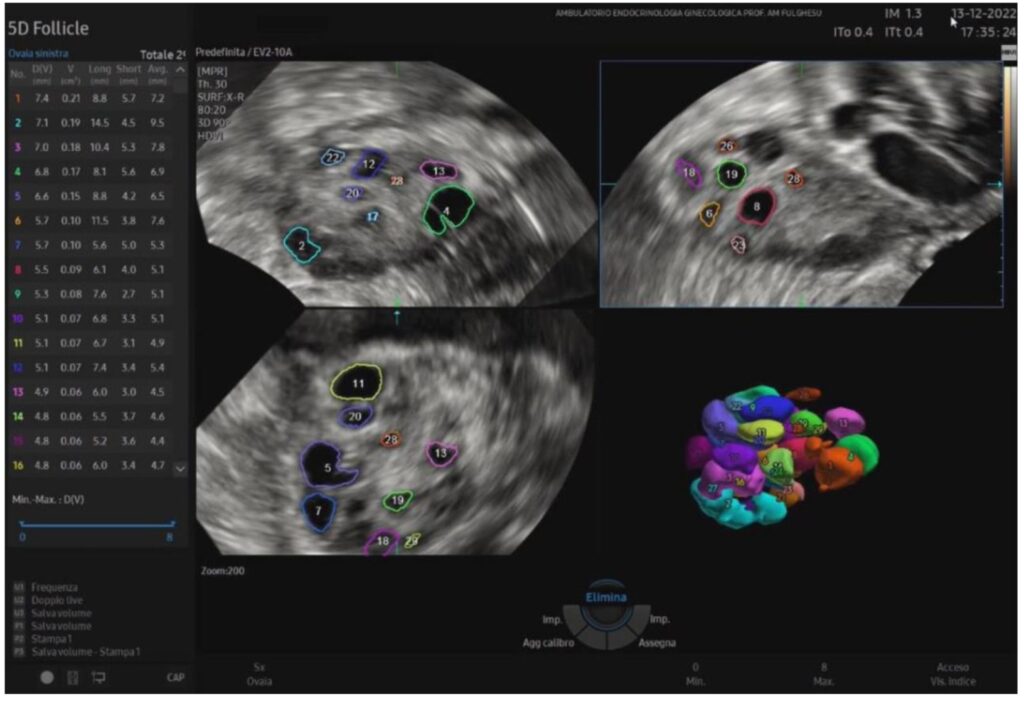
There is no single test able to diagnose if a woman has a low, medium, or high proportion of good-quality eggs. Whenever ovarian reserve is assessed, we try to anticipate if we will be able to retrieve a high, medium, or low number of oocytes. Unfortunately, that number is not associated, per se, with the egg quality.
Ovarian Reserve: Which Tests Assess Egg Quantity?
The most commonly used tests to predict the number of retrieved eggs are the anti-Müllerian hormone (AMH), follicle-stimulating hormone (FSH), and basal antral follicle count. These tests help choose the right controlled ovarian stimulation protocol and set patient expectations appropriately. They also assist in developing strategies to increase chances of obtaining more eggs and embryos for potential transfer.
PGT-A: A Window into Embryo Quality
Preimplantation genetic testing for aneuploidies (PGT-A) provides information about embryo quality by revealing the chromosomal status of specific blastocysts. Ideally, it could predict the likelihood of obtaining a high proportion of chromosomally normal embryos before a cycle begins.
AMH Is Not Associated with PGT-A Results
Research from Weill Medical College of Cornell University demonstrated that “AMH is not associated with embryo ploidy in patients with and without infertility.” High or low AMH does not predict whether a patient will achieve chromosomally normal embryos. No association was found between AMH and the proportion of euploid, mosaic, or aneuploid embryos.
What AMH Can — and Cannot — Tell You
Predicting ovarian reserve is useful but insufficient for anticipating embryo quality. Currently, a woman’s age is the only known variable that predicts the proportion of chromosomally normal embryos. Younger eggs correlate with higher chances of chromosomic normality.
A high AMH does not guarantee good-quality embryos — and a low AMH does not mean poor quality. Age remains the single most reliable predictor of embryo chromosomal normality.
Understanding this distinction is essential for setting realistic expectations and designing the most appropriate treatment strategy for each individual patient.